



If you’re narrowing your full-size SUV search down to the 2026 GMC Yukon and Chevrolet Tahoe, you’re already working with two of the strongest contenders in the segment. They share a platform, similar powertrains, and nearly identical dimensions, yet the experience of owning either one feels genuinely different depending on which badge you pick.
At Meadowland GMC, we work with Carmel, NY-area families every week who are wrestling with exactly this choice. Here’s an honest breakdown to help you decide. Browse our new GMC Yukon inventory in Carmel or schedule a test drive when you’re ready to feel the difference yourself.
Same Roots, Different Character: What Sets the 2026 Yukon and Tahoe Apart
Both the Yukon and Tahoe are built on General Motors’ T1 platform. They share structural DNA, major mechanical components, and a lot of the same engineering. But GM has deliberately aimed them at different buyers. The Tahoe targets families who want maximum space, everyday practicality, and solid value without necessarily chasing upscale finishes. The Yukon leans into a more premium identity, with elevated materials, more standard technology, and a cabin that competes more directly with luxury-branded SUVs.
That distinction becomes clear pretty early in the shopping process. The Tahoe makes a strong case on versatility and value. The Yukon answers with refinement and exclusivity, especially at higher trims like the Denali and AT4. Which one wins depends entirely on how you use the vehicle and what you expect from it every day.
Exterior Design and First Impressions
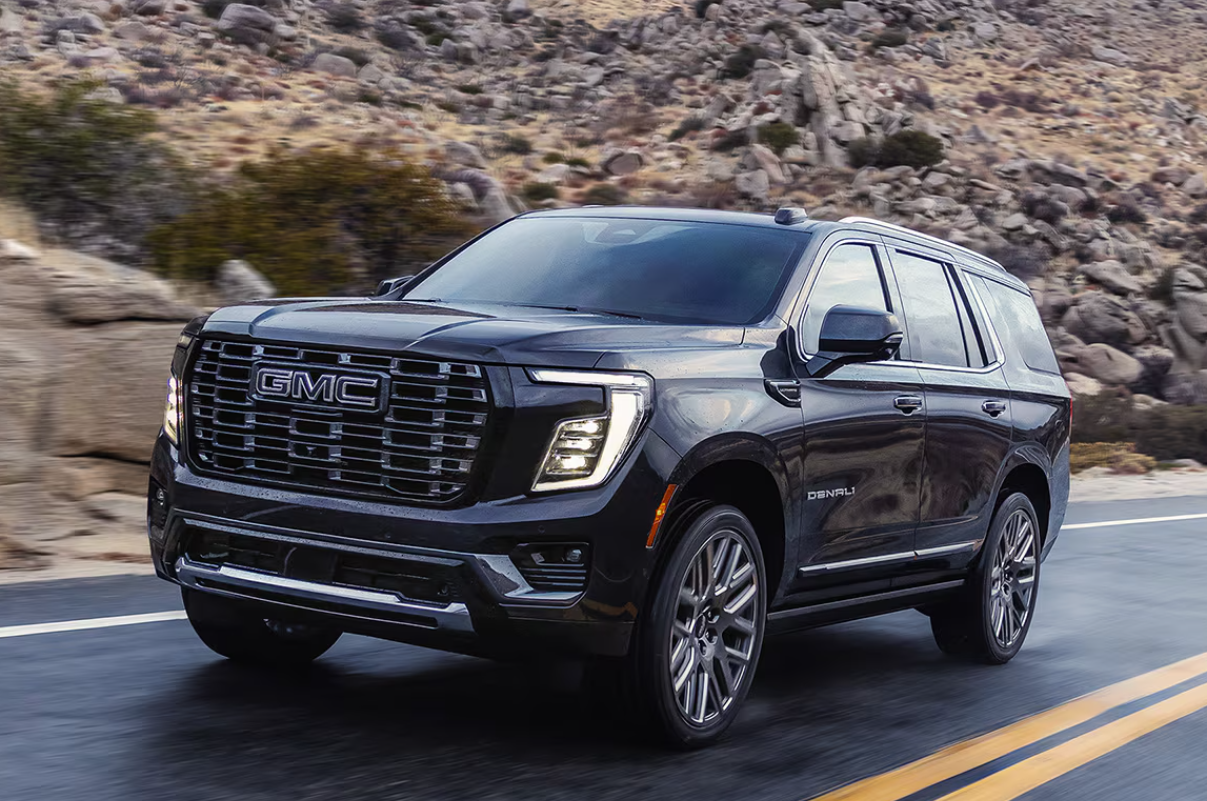
At first glance, these two look like close relatives, which of course they are. Both wear bold, upright front ends and commanding proportions that make clear they’re full-size trucks in SUV clothing. Look closer at the trim details, though, and the gap starts to show. The Yukon carries a more sculpted, polished aesthetic. Chrome accents, distinctive lighting signatures, and cleaner body lines give it a presence that reads premium before you ever open a door.
The Tahoe’s exterior is equally confident but leans slightly more utilitarian in character. It’s built to look capable and approachable, which fits its buyer profile well. If visual sophistication is on your checklist, the Yukon edges ahead. If you want a clean, purposeful look without the extra flair, the Tahoe delivers without hesitation.
Interior Quality and Cabin Experience
Step inside either vehicle and you’ll find a spacious, well-organized cabin built for families and long trips. That’s roughly where the surface-level similarities end.
Seating Comfort, Materials, and Fit-and-Finish
The interior comparison is one of the most telling parts of this whole debate. Starting with the Elevation trim, the Yukon comes equipped with heated front and second-row seats, a heated steering wheel, and power-release seats as standard. At the top of the lineup, the Yukon Denali Ultimate adds full-grain leather, massaging front seats, and executive second-row seating with power adjustments.
The Tahoe’s interior is well-executed and practical, but base trims use cloth seats, and ventilated seating requires stepping up to the Premier or High Country, while heated front seats are available starting with the LT. The High Country does offer perforated leather and heated/ventilated seats, but buyers planning to stay in the lower trims will feel that comfort gap right away. The Tahoe is comfortable, no question. It just feels more workmanlike next to the Yukon’s more refined presentation.
Infotainment, Tech Features, and Connectivity
Both SUVs come with wireless Apple CarPlay, Android Auto, Google Maps integration, an 11-inch digital gauge cluster, a power-adjustable heated steering wheel, and rain-sensing wipers, with a 15-inch head-up display available on both. Where they diverge is screen orientation and exclusive features. The Yukon uses a 16.8-inch portrait infotainment display; the Tahoe features a 17.7-inch horizontal landscape touchscreen. Both are large and responsive, though the Yukon’s portrait layout feels particularly intuitive for navigation and climate control.
The Yukon also includes an 8-inch rear climate touchscreen and available Night Vision technology, neither of which is offered on the Tahoe. Audio enthusiasts will appreciate that the Yukon offers an available 18-speaker Bose system, a significant step up from the 10-speaker setup standard on both models. If those exclusive features matter to you, get pre-approved and talk through trim options with our team.
Performance, Towing, and Ride Quality
Both SUVs are serious performers. GM equipped them with shared powertrain options, so neither vehicle will feel underpowered or out of its depth on demanding tasks.
Shared Powertrains and What They Deliver
The 2026 Yukon and Tahoe both offer a standard 5.3L V8, an available 6.2L V8, and an optional 3.0L Duramax turbodiesel for drivers who prioritize fuel efficiency and long-haul torque. All three engines pair with a 10-speed automatic transmission, and maximum towing reaches up to 8,400 lbs for the Tahoe and up to 8,200 lbs for the Yukon across trims. By design, the powertrain numbers are nearly identical between the two vehicles.
What differs is how those powertrains are supported by the surrounding architecture. The Yukon AT4 offers available air suspension, which makes a meaningful difference in ride quality on rough roads and during highway cruising. The system adjusts automatically to conditions, keeping the cabin smooth in a way the standard suspension simply can’t replicate.
How Each SUV Handles the Road
The Yukon prioritizes a composed, quieter ride. Additional sound insulation cuts road and wind noise noticeably, making long highway drives feel more relaxed. Its suspension tuning leans toward comfort without becoming floaty, which is exactly the balance most full-size SUV buyers are looking for.
The Tahoe handles confidently and capably, but it carries a more utilitarian character behind the wheel. On rougher terrain around Carmel and the broader Putnam County region, that ride quality difference becomes especially apparent during daily commutes and weekend trips.
Practicality and Family-Friendly Features
Cargo Space and Everyday Usability
On sheer size, these two are genuinely close. Both offer generous passenger space across three rows, 25.5 cubic feet behind the third row, 72.5 cubic feet with the third row folded, and over 120 cubic feet at maximum capacity. That’s enough room for sports equipment, road trip luggage, or a full run to the home improvement store.
Where the Yukon adds practical value is in features like available power-folding third-row seats and thoughtful storage solutions built into the cabin. These conveniences reduce the physical effort of reconfiguring the SUV for different tasks, which matters more than it sounds after a long day hauling kids and gear.
Safety and Driver-Assistance Technology
Both models include GM Safety Assist as standard, covering automatic emergency braking, forward collision alert, lane-keeping assist, and adaptive cruise control. The Yukon’s available Night Vision system adds a real advantage for drivers navigating rural or poorly lit roads, a legitimate consideration for those regularly driving through northern Westchester and Putnam County. On the Tahoe, some of those same safety features require moving into higher trims or adding option packages that the Yukon includes more broadly from the start.
GMC Yukon vs. Chevrolet Tahoe: Side-by-Side Comparison
Put these two directly side by side and a clear pattern emerges. The Yukon leads in interior quality, standard technology, ride refinement, and available luxury features. The Tahoe leads in entry-level affordability and value-focused configuration.
| Feature | GMC Yukon | Chevrolet Tahoe |
|---|---|---|
| Trim Levels | Elevation, AT4, Denali, AT4 Ultimate, Denali Ultimate | LS, LT, RST, Z71, Premier, High Country |
| Engine Options | 5.3L V8, 6.2L V8, 3.0L Duramax turbodiesel | 5.3L V8, 6.2L V8, 3.0L Duramax turbodiesel |
| Max Towing | Up to 8,200 lbs | Up to 8,400 lbs |
| Max Cargo Volume | 122.8 cu. ft. | 122.7 cu. ft. |
| Key Standard Features | Heated front and second-row seats, power-release seats, heated steering wheel, 10-speaker audio | Tri-zone climate control, cloth seats (heated/ventilated seating requires higher trims) |
| Infotainment Screen | 16.8-inch portrait touchscreen | 17.7-inch landscape touchscreen |
On the specs that matter most, including engine output, towing capacity, and interior volume, these two are very closely matched. The real distinction is how much premium content each delivers without requiring an upgrade.
Which Full-Size SUV Is Right for Carmel-Area Drivers?
The right choice comes down to what you want your SUV to feel like every single day. Drivers who commute on Route 6, take weekend trips through the Hudson Valley, or need a capable vehicle for all-season driving will find both options solid mechanically. The decision tilts on lifestyle and what you value most.
If you want a vehicle that feels premium the moment you sit down, offers more technology without working through a long options checklist, and delivers a quieter and smoother driving experience, the GMC Yukon is the better fit. It’s the choice for buyers who see their SUV as more than just transportation.
If you’re balancing a tighter budget, need a capable workhorse for the family, and are comfortable trading some luxury touches for a lower starting price, the Tahoe is a smart, honest choice. It won’t let you down.
One thing worth calculating before you assume the Tahoe is automatically the more affordable path: the Yukon’s additional standard features often narrow the real-world price gap once you account for the options you’d need to add to a comparably configured Tahoe.
Explore the 2026 GMC Yukon Lineup at Meadowland GMC
If the GMC Yukon sounds like the right match, the best next step is experiencing it in person. We carry the full 2026 lineup here at Meadowland GMC, located at 1952 Route 6 in Carmel, NY. Our team can walk you through trim differences, help you explore available configurations, and set up a test drive so you can feel the Yukon’s ride quality and cabin refinement for yourself. You can also browse our full GMC SUV lineup to see everything we currently have available.
Our sales team is available Monday through Thursday from 9 AM to 7 PM and Friday through Saturday from 9 AM to 6 PM at (845) 228-8460. Factory-trained service technicians are available Monday through Friday from 8 AM to 5 PM and Saturday from 8 AM to 3 PM at (845) 228-8465. You can also reach out online to get the conversation started before you visit.
On paper, this comparison is close. But sitting in a Yukon Denali for ten minutes tends to make the decision a lot clearer. Schedule your test drive today and let us help you find the configuration that fits your life.
Connect with us

- July 2026
- June 2026
- May 2026
- April 2026
- March 2026
- February 2026
- January 2026
- December 2025
- November 2025
- October 2025
- September 2025
- August 2025
- July 2025
- June 2025
- May 2025
- April 2025
- March 2025
- February 2025
- January 2025
- December 2024
- November 2024
- October 2024
- September 2024
- August 2024
- July 2024
- June 2024
- May 2024
- April 2024
- March 2024
- February 2024
- January 2024
- December 2023
- November 2023
- October 2023
- September 2023
- August 2023
- July 2023
- June 2023
- May 2023
- April 2023
- March 2023
- February 2023
- January 2023
- December 2022
- November 2022
- October 2022
- September 2022
- August 2022
- July 2022
- June 2022
- May 2022
- April 2022
- March 2022
- February 2022