



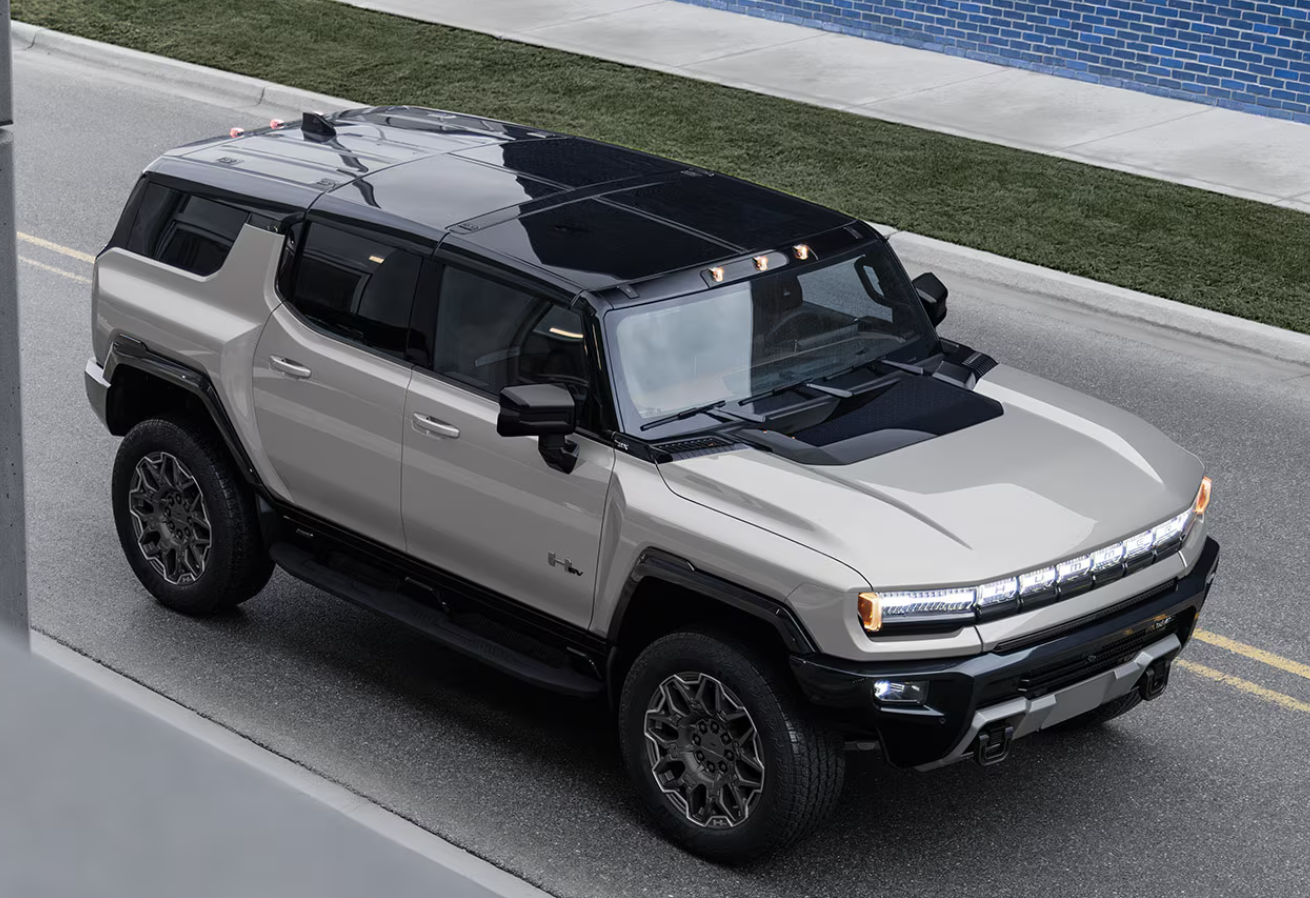
Electric power hasn’t killed the thrill of serious off-road adventures. The 2026 GMC Hummer EV SUV and Ford F-150 Lightning show us two completely different ways to blend zero emissions with trail-crushing performance. Both trucks promise to change what we expect from electric vehicles when the pavement ends, but they take wildly different approaches when things get rough.
Here at Meadowland GMC, we’ve spent time figuring out how these two electric beasts stack up for folks who won’t choose between being environmentally conscious and adventure-ready. The 2026 GMC Hummer EV SUV vs Ford F‑150 Lightning comparison shows just how differently each brand sees the future of off-road capability. Want to feel the difference yourself? Schedule a test drive with our team in Carmel, NY.
Electric Motors Change Everything Off-Road
Electric motors hit you with instant torque. That changes everything about how vehicles respond when you’re crawling over rocks or through mud. This basic advantage gives EVs a natural edge over gas engines when you need precise power control on tricky terrain.
Both the GMC Hummer EV SUV and Ford F-150 Lightning use this electric advantage, just in different ways. When you mount heavy batteries low in the chassis, you get a much lower center of gravity. That means better stability when you’re throwing the truck around on steep angles. Plus, regenerative braking captures energy on downhills while giving you that engine-braking feel that helps you stay in control.
Power Numbers That Actually Matter
The GMC Hummer EV SUV goes all-in with a tri-motor setup. You get one motor up front and two in the back. This lets the truck do some seriously smart torque vectoring, sending power exactly where each wheel needs it. We’re talking 830 hp and 11,500 lb-ft of torque at the wheels here. Hit Watts to Freedom mode and you’ll see 60 mph in just 3.3 seconds.
Ford kept things simpler with the F-150 Lightning. One motor at each axle delivers up to 580 hp and 775 lb-ft of torque, getting you to 60 mph in about 4 seconds. Output ranges from 452 hp on the standard extended-range battery to 536 hp or 580 hp, depending on trim and battery configuration. It’s less complicated than the Hummer’s approach, but the power delivery feels more predictable and linear.
The Numbers Side by Side
|
Specification |
2026 GMC Hummer EV SUV |
Ford F-150 Lightning |
|
Powertrain |
Tri-motor |
Dual-motor |
|
Horsepower |
830 hp |
Up to 580 hp |
|
Torque |
11,500 lb-ft |
775 lb-ft |
|
Battery Capacity |
170 kWh |
123-131 kWh |
|
Max Ground Clearance |
16 inches |
8.5 inches |
|
Approach/Departure/Breakover |
Up to 49.7° / 49.0° / 34.4° |
24.4° / 23.6° / 17.6° |
How the Hummer EV’s Electric System Works
The Hummer EV runs on Ultium battery tech with a massive 170 kWh pack split into 20 modules. This modular setup sits under the cabin floor, creating that skateboard-like platform that gives you tons of interior room while keeping the center of gravity super low.
Keeping everything cool becomes crucial when you’re beating on the truck all day on trails. The Hummer EV has sophisticated cooling circuits that keep battery temps in the sweet spot during long trail sessions. Since you’ve got three motors instead of one, the heat gets spread around instead of concentrated in one spot.
The battery management software constantly watches over every cell, balancing the charge and adjusting power output based on temperature, charge level, and what you’re asking from the truck.
Ford’s Power Approach
The Lightning’s extended-range battery (available in 123 kWh or 131 kWh configurations depending on trim) gives you a solid output plus better range. Ford tuned the throttle response to feel familiar if you’re coming from a gas F-150. The torque hits instantly, but they’ve calibrated it to prevent you from spinning the wheels every time you touch the pedal in slippery conditions.
This dual-motor setup cuts down on complexity while still giving you capable all-wheel-drive performance across different types of terrain.
Suspension and Ground Clearance: Where Height Matters
How well your suspension handles impacts and keeps the wheels planted determines whether you’ll make it through rough stuff or get stuck. The Hummer EV features adaptive air suspension that adjusts height and damping on the fly, reacting to what the terrain throws at you and how you’re driving. Multiple height settings include Extract Mode, which gives you an extra 6 inches of lift for a maximum ground clearance of 16 inches.
The F-150 Lightning uses independent front and rear suspension, balancing ride comfort with the ability to haul heavy loads. At 8.5 inches of ground clearance, it’s less adjustable than the Hummer’s air system, but the setup delivers predictable behavior and solid durability.
Air Suspension That Actually Works
The Hummer EV’s air suspension gives it one of its biggest off-road advantages. Normal mode balances clearance with highway aerodynamics, while off-road modes progressively lift the truck higher. Extract Mode maxes out the height for getting over serious obstacles without forcing you to drive around town looking like a monster truck.
Electronic valves adjust air pressure at each corner individually. This manages body roll when you’re cornering hard while soaking up hits from rocks and ruts. The automatic leveling keeps everything consistent no matter what you’re carrying.
Clearance Angles Tell the Real Story
Those approach, departure, and breakover angles determine what you can actually drive over without scraping. The Hummer EV delivers approach angles up to 49.7°, departure angles up to 49.0, and breakover angles up to 34.4°. These numbers let you tackle steep climbs and descents without dragging your bumpers or belly pan.
The F-150 Lightning’s dimensions reflect its pickup truck DNA: approach angles up to 24.4°, departure angles up to 23.6°, and breakover angles up to 17.6°. It’ll handle moderate trails just fine, but the Lightning targets people who need to haul and tow as much as they need to crawl rocks.
Terrain Modes and High-Tech Trail Features
Selectable terrain modes change how the truck responds to different conditions. The Hummer EV gives you a full menu, including Rock mode for maximum low-speed control and Mud/Rut mode for controlled wheel slip through soft surfaces. These modes completely change throttle response, traction control, and how the regenerative braking works.
The tri-motor system can brake individual wheels, creating virtual locking differentials that send torque wherever you’ve got grip. If you’re planning to explore the Hudson Valley’s diverse terrain, you should explore the GMC Hummer EV SUV and see how these systems perform in person.
The F-150 Lightning includes terrain management with modes covering typical off-road scenarios. The setup feels intuitive, with straightforward mode selection that handles common trail challenges effectively.
Extract Mode and CrabWalk: The Party Tricks
Extract Mode shoots the suspension up to maximum height, creating incredible ground clearance for navigating serious obstacles. It takes just moments to activate, with the air suspension pumping up to lift the body. The system automatically lowers after a while to prevent putting too much stress on the components.
CrabWalk lets you drive diagonally thanks to four-wheel steering. All four wheels can angle the same direction, so the truck moves sideways instead of just forward and back. This capability really shines on narrow trails where obstacles force you to adjust your position laterally.
Most trucks require multiple-point turns to reposition on tight trails. CrabWalk eliminates that tedious back-and-forth, letting you slide sideways to find the best line through technical sections.
Ford’s Trail Control Systems
Ford’s Trail Control works like cruise control for off-road use. You set your desired crawling speed, and the system handles throttle and braking to maintain that pace. This frees you up to focus entirely on steering through the technical stuff.
Hill Descent Control specifically targets downhill scenarios, keeping you at safe speeds on steep grades. These driver-assistance features make challenging terrain more accessible to people who don’t have years of rock crawling experience.
How They Actually Perform on Real Trails
Trail performance comes down to how everything works together when you’re out there getting dirty. The Hummer EV excels at rock crawling, where that tri-motor system’s precise power placement makes the biggest difference. Extract Mode and CrabWalk give you real advantages in situations where other trucks might leave you walking.
The impressive specs on paper translate into genuine confidence on challenging trails. People report feeling capable of attempting obstacles that would seem intimidating in regular trucks. That’s a psychological advantage that comes from having sophisticated systems working seamlessly to maximize traction and clearance.
But the Hummer EV’s roughly 10,000-lb curb weight creates challenges in certain situations. While wide tires and traction systems handle this mass well, the Lightning’s lighter build might have an edge in mud or sand where weight works against you.
Range management requires some planning during long trail sessions, especially on flat trails where regenerative braking can’t capture much energy. You need to understand battery consumption patterns if you’re planning backcountry adventures in the Catskills or other regional spots.
Which Electric Truck Wins on the Trails?
Picking the better off-road performer depends on what you’re trying to accomplish. When trails demand maximum clearance, articulation, and traction management, the Hummer EV’s specialized features deliver obvious advantages. Extract Mode and CrabWalk provide capabilities the Lightning simply doesn’t have.
That tri-motor system’s 830 hp and 11,500 lb-ft of torque, combined with 16 inches of ground clearance and aggressive approach angles, creates exceptional capability on technical terrain. These innovations make the vehicle an ultimate off-road statement for serious enthusiasts.
The F-150 Lightning fights back with practicality and versatility that goes way beyond trail performance. The pickup bed provides utility the Hummer SUV configuration can’t match, while lower weight helps efficiency for daily driving. The Lightning works as a real truck for hauling and towing while still handling moderate off-road adventures.
If you prioritize extreme capability and advanced features, the Hummer EV represents the peak of electric off-road engineering.
Check Out the GMC Hummer EV SUV at Meadowland GMC Near Carmel
Feel the Difference for Yourself
Actually driving the Hummer EV reveals details that specs alone can’t communicate. Come visit us at Meadowland GMC in Carmel, NY for a demonstration of Extract Mode and CrabWalk in action. Our team can explain how these features enhance your off-road adventures and help you figure out whether this remarkable electric SUV fits your needs.
Test drives let you feel that instant torque delivery and see how the tri-motor system manages traction on different surfaces.
Come See Us
We’ve been serving the Carmel area from our Route 6 location since 1952, bringing decades of automotive knowledge into the electric vehicle era. Our factory-trained technicians understand the specialized maintenance electric vehicles need, keeping your truck running right throughout ownership.
Contact our EV specialists at (845) 228-8460 to schedule your test drive, or browse our new vehicle inventory online. We’re open Monday through Thursday from 9 AM to 7 PM, Friday and Saturday from 9 AM to 6 PM, ready to help you discover how the GMC Hummer EV SUV might transform your off-road adventures.
Connect with us

- July 2026
- June 2026
- May 2026
- April 2026
- March 2026
- February 2026
- January 2026
- December 2025
- November 2025
- October 2025
- September 2025
- August 2025
- July 2025
- June 2025
- May 2025
- April 2025
- March 2025
- February 2025
- January 2025
- December 2024
- November 2024
- October 2024
- September 2024
- August 2024
- July 2024
- June 2024
- May 2024
- April 2024
- March 2024
- February 2024
- January 2024
- December 2023
- November 2023
- October 2023
- September 2023
- August 2023
- July 2023
- June 2023
- May 2023
- April 2023
- March 2023
- February 2023
- January 2023
- December 2022
- November 2022
- October 2022
- September 2022
- August 2022
- July 2022
- June 2022
- May 2022
- April 2022
- March 2022
- February 2022